Over 100 Courses, Designed by Names That Matter, and Playable Every Month of the Year
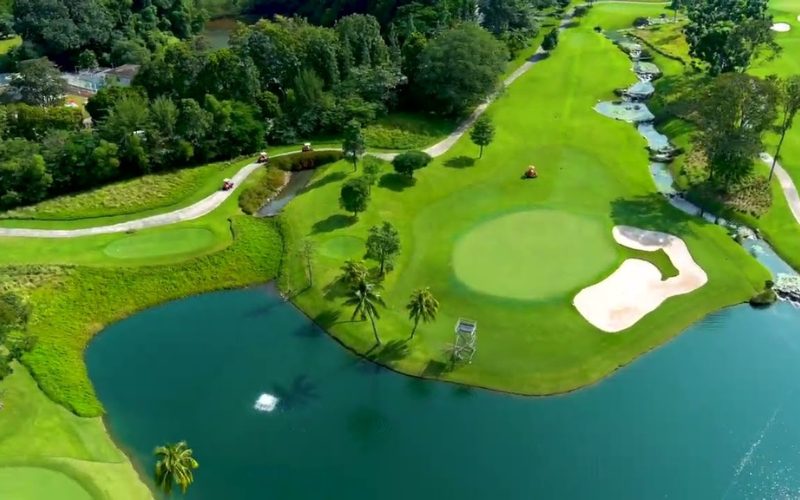
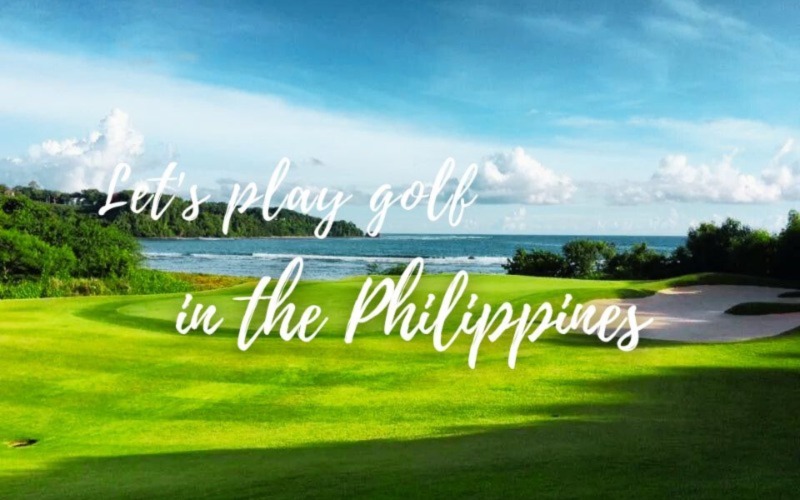
The Philippines has more than 100 golf courses, with around 30 open to the public, and that volume includes work from Nick Faldo, Robert Trent Jones, Arnold Palmer, and Jack Nicklaus. Manila Southwoods Golf and Country Club alone has two championship layouts designed by Nicklaus. The Riviera Golf Club carries designs from Greg Norman and Fred Couples. That is a depth of design pedigree that few countries in the GolfLux portfolio can match at this scale.
What separates the Philippines from Thailand or Vietnam is the climate consistency. The tropical climate here does not impose the same seasonal restrictions that shape golf planning elsewhere in Southeast Asia. While November to April is the dry season and the most popular window, courses remain playable year-round, which gives golfers more flexibility in choosing travel dates without working around a hard rainy season.
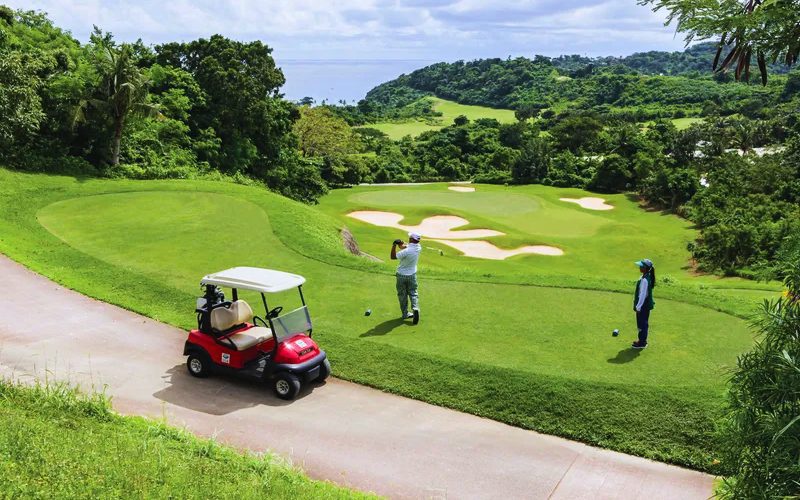
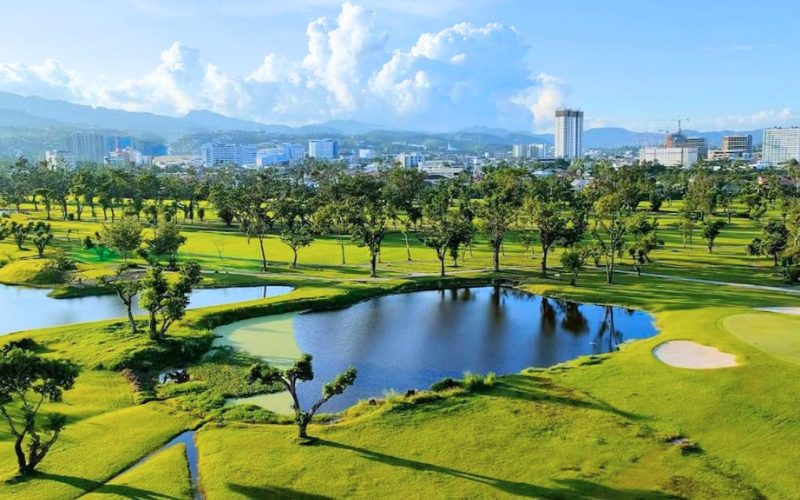
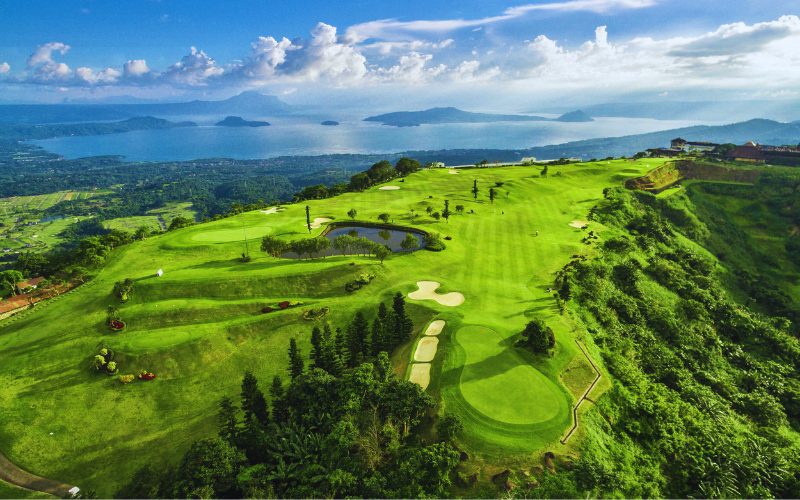
The terrain variety matches the design pedigree. Alta Vista Golf and Country Club in Cebu plays through mountain terrain with views over the city and coast. Baguio Country Club sits in the cool highlands of Baguio City, one of the older clubs in the country with a character shaped by altitude rather than coastal exposure. Anvaya Cove Golf and Sports Club looks out over the West Philippine Sea. Three fundamentally different settings, all within a country small enough to combine in a single multi-destination itinerary.
How to Choose the Right Philippines Golf Destination
The five destinations in the GolfLux Philippines portfolio each serve a different kind of trip.
If you want the broadest course selection with the most international airport connections, Manila Golf Packages is the practical base, with courses like Manila Southwoods and Sherwood Hills within reach of the capital. If you want a highland extension with cooler temperatures, Tagaytay Golf Packages and Baguio both sit at elevation and pair naturally with Manila on a combined itinerary. Clark Golf Packages covers the area north of Manila with a strong concentration of courses and its own international airport, useful for golfers who want to avoid Manila’s traffic entirely. Cebu Golf Packages gives you mountain golf with sea views in the country’s second-largest urban area. And Boracay Golf Packages puts the beach resort experience first, with golf as a complement to one of the country’s best-known islands.
The most common combinations pair Manila or Clark with Boracay for golf plus beach, or Manila with Baguio for golf plus highland scenery. Both routings appear as specific packages in the portfolio, which keeps the planning straightforward rather than requiring separate domestic flight bookings on your own.
Who a Philippines Golf Holiday Is Best For
The Philippines suits golfers who are conscious of value without wanting to compromise on course quality. Green fees at public and semi-private courses generally run from USD 10 to 50, while the high-end private clubs reach USD 60 to 80, which is competitive against comparable course quality in Thailand or Vietnam. Combined with affordable accommodation and dining, a Philippines golf holiday tends to stretch further per dollar than most other destinations in the GolfLux portfolio.
It also suits golfers who want golf to sit alongside a genuine island holiday rather than a city-based trip. Boracay’s white sand beaches, Cebu’s diving and snorkeling, and Palawan’s landscapes (reachable as an extension from several of these hubs) give non-golfers in a group a full program independent of the golf schedule.
For golfers who want flexibility in timing, the year-round playability removes the pressure that defines trip planning in destinations with a hard wet season. November to April remains the peak window with the best conditions and the most predictable weather, but May and October offer a practical middle ground: fewer crowds, lower rates, and conditions that are still good enough for a comfortable round. Caddies are standard at Philippine courses, and local hospitality is consistently noted by visitors as a defining part of the experience, with caddies who know the course well and resort staff who tend to go beyond the basics of service.